6 Days First Breath: A Calving Season Immersion

overview

Our lead guides have tracked the migration’s southern movement for 12+ years — not from guidebooks, but from Maasai oral knowledge passed through generations. We know exactly where nutrient-rich volcanic soils concentrate births (not just “Ndutu plains”), when predator clans shift territories as calves age, and how afternoon thunderstorms trigger synchronized birthing events. This isn’t tourism — it’s witnessing Earth’s oldest rhythm with those who understand its language.
Day to day itinerary

KLA
Depart Arusha at 7:30 AM — deliberately early to reach Ndutu before midday heat suppresses wildlife activity. Your guide (a Maasai elder trained in wildlife ecology) begins sharing migration wisdom as we descend the Rift Valley escarpment: “The wildebeest don’t follow rain — they follow the smell of new grass growing on volcanic ash.”
Cross into the Ngorongoro Conservation Area, where the landscape transforms: acacia woodlands give way to endless short-grass plains shimmering under vast skies. By 1:00 PM, arrive at your mobile camp positioned within the calving zone — not on its periphery. After a hot lunch, begin your first game drive as the afternoon thermals lift.
Witness the spectacle unfold: thousands of wildebeest cows standing in tight clusters, newborn calves wobbling within minutes of birth, and watchful predators calculating risk. Your guide explains calf survival strategies — why mothers nuzzle specific scents onto newborns, how herds form protective circles during hyena approaches.
Breakfast
Lunch
Dinner
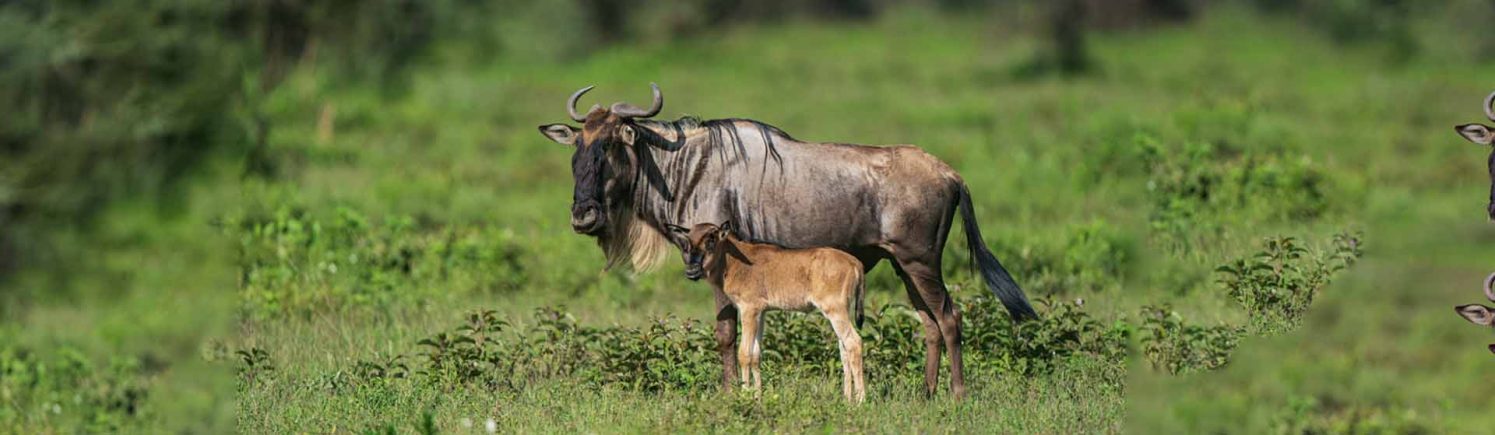
Wildebeest with calf__
Rise at 5:45 AM for the calving season’s most profound hours. Predators hunt at dawn; births peak as temperatures cool. Your guide navigates permitted off-road zones to position you near a wildebeest “maternity herd” — hundreds of cows in advanced pregnancy standing shoulder-to-shoulder.
Witness multiple births within an hour: the sudden drop, frantic licking, first wobbly steps. Track a cheetah mother teaching cubs to stalk — not hunting yet, but practicing pounces on grass tufts while ignoring vulnerable calves nearby (a survival lesson: conserve energy when prey is abundant).
Afternoon brings dramatic shifts: a lioness separates a calf from its mother in a heart-pounding chase. Your guide narrates the ecological balance without judgment — “This hunt feeds her cubs. Those surviving calves strengthen the herd.” Return to camp as thunderheads build on the horizon — often triggering synchronized birthing events after rain.
Breakfast
Lunch
Dinner
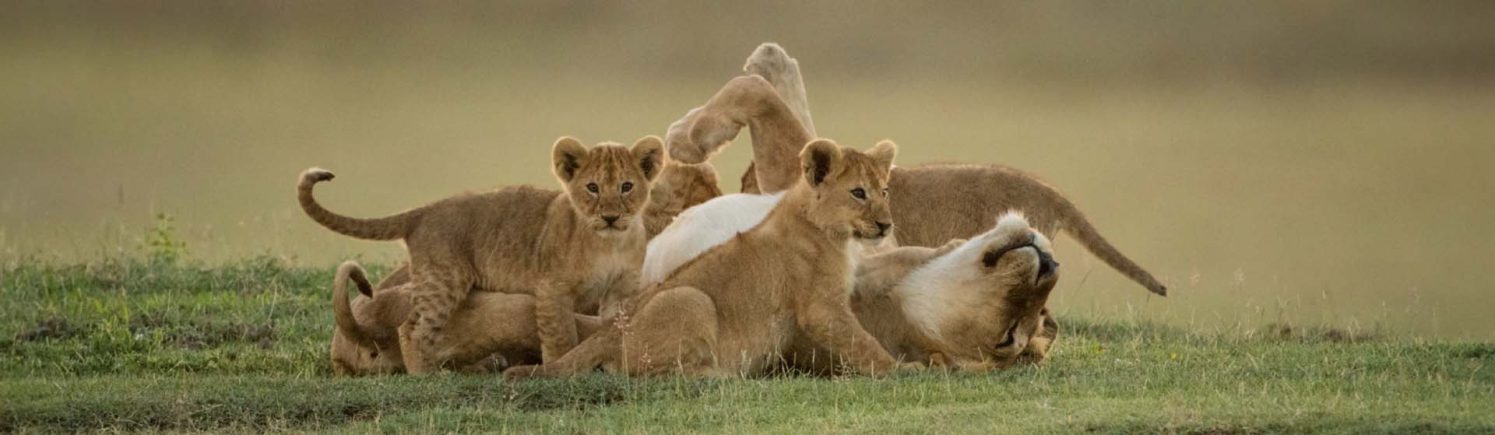
Cub approaches others surrounding lioness on grass
Today we focus on predator behavior cycles during calving season — a dimension most safaris miss. Your guide explains how different predators exploit this brief window:
  • Spotted hyenas: Hunt in clans at dusk when mothers are exhausted
  • Lions: Target calves separated during herd movements between grazing patches
  • Cheetahs: Wait until calves are 3-5 days old (strong enough to trigger chase instinct, weak enough to catch)
Position near a marshy area where wildebeest concentrate for mineral-rich water — also where lions ambush from tall grass. Witness a rare event: a leopard dragging a 3-day-old calf into an acacia tree, feeding over two days while hyenas circle below.
Late afternoon, visit a Maasai boma near the conservation area boundary. Elders share how they’ve coexisted with the migration for centuries — moving livestock seasonally to avoid calving zones, respecting wildlife corridors. This isn’t a staged “cultural show” — it’s genuine dialogue about shared land stewardship.
Breakfast
Lunch
Dinner
Depart after a final dawn drive tracking a wildebeest herd beginning its northward movement — calves now strong enough to travel. Your guide reads the signs: “They’ve grazed these plains bare. Tomorrow they move toward Moru Kopjes.”
Journey north through the Serengeti ecosystem, entering the park near Naabi Hill Gate. Unlike rushed transfers, we treat this drive as active wildlife viewing: stop at a kopje where resident leopards rest (unrelated to migration), watch elephants stripping bark in woodlands, and spot secretary birds striding through grasslands.
Arrive at Seronera Valley by late afternoon. Though the migration has moved south for calving, this area maintains year-round wildlife density. Your evening game drive focuses on resident predators: a lion pride resting after hunting resident buffalo herds, not migrating calves.
Breakfast
Lunch
Dinner
Morning game drive in Seronera tracking leopard movements along riverine forests — a different hunting style than the open-plains predators of Ndutu. After breakfast, begin your ascent from Serengeti plains into the misty Ngorongoro Highlands.
This transition reveals Tanzania’s geological story: volcanic soils that nourish Ndutu’s calving grounds originated from this very crater’s ancient eruption. Your guide connects the dots: “The ash that feeds newborn calves came from this mountain millions of years ago.”
Arrive at your lodge perched on the eastern crater rim — deliberately chosen for sunset views away from crowded western viewpoints. As clouds drift below your veranda, reflect on the journey: from vulnerable newborns on open plains to this protected volcanic Eden.
Breakfast
Lunch
Dinner
Descend into the crater at 6:00 AM — before tourist vehicles arrive — to observe wildlife during peak activity. While Ndutu showcased life’s beginning, the crater reveals its continuity: a black rhino mother with calf, elephant matriarch leading family to Lerai Forest, lion pride resting after dawn hunt.
Your guide draws parallels: “In Ndutu, predators hunt the vulnerable. Here, the crater’s walls protect all — even rhinos thrive.” This contrast completes your understanding of Tanzania’s ecological tapestry.
After a crater-floor picnic near hippo pools, ascend the rim and begin your return to Arusha. Your guide presents a small farewell gift: a hand-carved wooden wildebeest by a Maasai artisan from the Ndutu region — symbolizing the cycle you witnessed.
Breakfast
Lunch
Dinner

ICONIC WILDLIFE

Flamingo

Lesser flamingos gather seasonally at Lake Manyara and Natron, filter-feeding upside-down on algae with specialized beaks while breeding exclusively on Natron’s caustic soda flats.

Giraffe

Masai giraffes browse acacia canopies across northern parks, their 50cm tongues deftly avoiding thorns while calves freeze motionless beneath bushes to evade predators.

Wildebeest

1.5 million wildebeest migrate cyclically through Serengeti-Mara ecosystem, calves born within a three-week window to overwhelm predators through sheer numerical safety.

Black Rhino

Critically endangered black rhinos browse Ngorongoro’s Lerai Forest at dawn, using hooked lips to pluck leaves in this volcanic sanctuary.

Zebra

Burchell’s zebras migrate alongside wildebeest across Serengeti plains, their unique stripe patterns creating optical confusion that disrupts predator targeting during river crossings.

Hippo

Crocodile

Crocodiles ambush prey along Grumeti and Rufiji rivers, using stealthy “death rolls” during wildebeest crossings—powerful spins that drown large mammals in under a minute.

Elephants

Tarangire National Park shelters Tanzania’s largest elephant herds amid ancient baobabs, while Selous Game Reserve offers boat-viewing of these gentle giants along the Rufiji River.

Leopards

Tanzania’s leopards are stealthy, solitary big cats renowned for hoisting prey into acacia trees across Serengeti and Tarangire to avoid scavengers like lions and hyenas.

Cheetahs

Tanzania’s cheetahs are the world’s fastest land mammals, sprinting up to 112 km/h across Serengeti plains while hunting in daylight with exceptional eyesight and agile precision.

Lions

Tanzania’s lions are apex predators thriving in female-led prides across Serengeti and Ngorongoro, with unique tree-climbing behavior famously observed in Lake Manyara National Park.

Spotted Hyena

Matriarchal hyena clans dominate nocturnal hunts across Tanzania’s parks, crushing bone with 1,100-psi jaws and whooping to coordinate clan movements under starlight.

African Wild Dog

Endangered wild dogs roam Ruaha and Selous in tight-knit packs, achieving 80% hunting success through vocal coordination and endurance chases that exhaust prey over kilometers.

Includes and excludes

What's INCLUDED

What's NOT INCLUDED

related activities

Hot Air Ballon

Walking safari

Bush Lunch

talk to our expert

Do  you have any Question or you need more information about this itinerary?

BOOK FOR A TRIP

Request your tailored African safari quote now

BOOK NOW A SAFARI

Related

ITINERARIES

05 Days Tanzania Express Safari: Northern Circuit Adventure

4 Days Wild Heartbeat: Tanzania’s Northern Circuit Safari

3 Days Golden Horizons: Serengeti Express Safari

6-Day Tanzania Safari Serengeti Big 5 & Maasai Culture

7 Days Rhythm of the Wild: A Soulful Northern Circuit Journey

6 Days First Breath: A Calving Season Immersion

9 Days The Unhurried Circle: A Reverse Northern Circuit Journey

10 Days Threads of Earth: Migration & Living Culture Journey

6 Days Salt & Soul: A Zanzibar Journey Beyond the Postcard

6 Days Where the Ocean Breathes: A Mafia Island Immersion